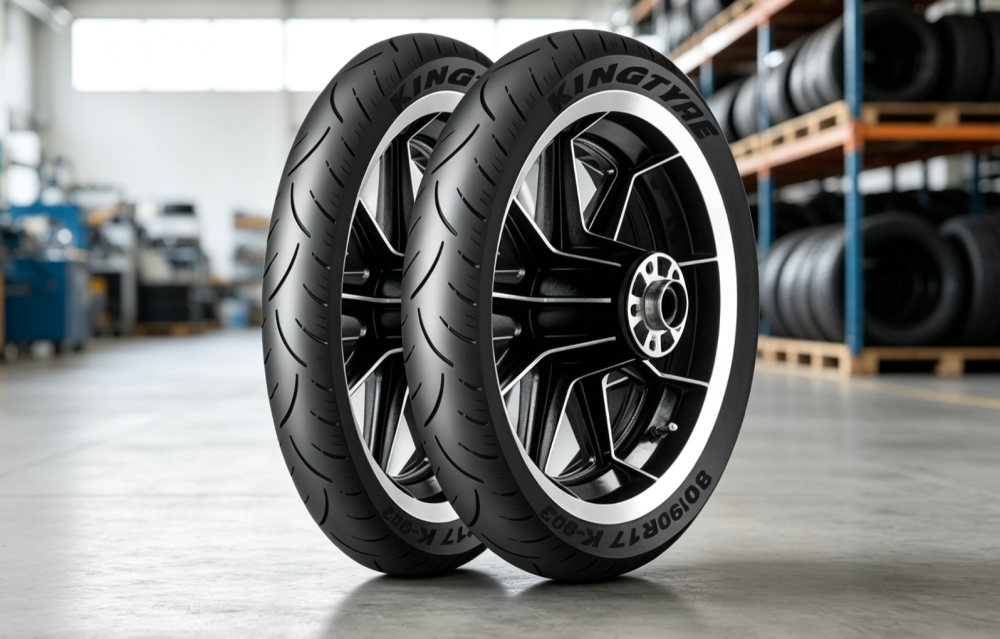
Why Radial Construction Matters for Commuter Motorcycles
Commuter motorcycles operate under a distinct set of demands: frequent starts and stops, mixed city and highway conditions, variable pavement quality, and the need for predictable handling. For international distributors and OEM/ODM buyers, understanding the benefits of radial tyre construction in this segment is essential when selecting products for your portfolio.
Unlike bias-ply tyres, radial tyres feature carcass cords that run perpendicular to the direction of travel. This design allows the tread area to remain more stable at speed, reduces heat buildup, and provides a larger contact patch under load. For commuter models in the popular 60/90R17 and 80/90R17 sizes, radial construction can contribute to improved stability, more even wear, and better mileage potential—key factors for daily riders and fleet operators.
Key Specifications to Review Before Sourcing
When evaluating motorcycle radial tyres for commuting, several specification points deserve close attention. Distributors should confirm that the products they source meet the requirements of their local markets, including common motorcycle models and rider expectations.
Tyre size and rim fitment: The 60/90R17 and 80/90R17 sizes are typically used on lightweight and medium commuter motorcycles. Verify that the recommended rim widths for these sizes match the common motorcycle rims in your target market. The provided spec includes front and rear fitments with rim recommendations of 1.4 and MT 1.85 respectively.
Load index and speed rating: A load index tells you the maximum weight capacity at a specified pressure. In the available specification example, the front tyre is marked with load index 36 and speed rating S (112 km/h), while the rear is 50S (190 km/h). Ensure the tyre’s load capacity adequately covers the motorcycle’s gross weight, including passengers and luggage.
Tread pattern: For commuting, a tread pattern that balances wet grip, groove stability, and rolling resistance is ideal. The K903 pattern, listed in the product specification for both front and rear, is designed to meet these everyday requirements. Review the tread pattern’s water evacuation channels and wear characteristics under normal commuting conditions.
Durability and mileage: Commuter tyres should resist irregular wear caused by frequent braking and acceleration. Radial construction, combined with a suitable compound, can help extend tyre life. Ask your supplier for technical data sheets that describe compound characteristics and recommended usage.
Understanding Tube-Type vs. Tubeless
Both the 60/90R17 and 80/90R17 in the described range are available as TL (tubeless) or TT (tube-type). This gives distributors flexibility to serve different market segments. In many emerging markets, tube-type tyres are still common because of the availability of tubes and repair services. In more developed markets, tubeless tyres are preferred for their puncture resistance and ease of inflation. When sourcing, check that the supplier can provide both versions and that the bead design is compatible with the intended rim type.
Matching Rim Width and Tyre Geometry
Correct rim width is critical for optimal tyre performance. The specification data for the front K903 60/90R17 tyre indicates a rim width of 1.4 inches, while the rear K903 80/90R17 tyre suggests a rim width of MT 1.85 inches. Distributors should communicate these requirements to their local fitting shops and end customers. Using a rim that is too narrow or too wide can affect handling, wear uniformity, and the tyre’s ability to hold pressure effectively.
Sourcing from a Reliable Manufacturer and OEM/ODM Partner
For importers and wholesalers, partnering with a manufacturer that understands radial commuter tyre production is important. Wanda Tyre, as a China-based motorcycle radial tyre manufacturer and OEM supplier, focuses on producing dependable commute-oriented tyres in these sizes. When selecting a factory partner, consider the following factors:
Production consistency: Inquire about process controls and quality checks during curing and finishing. Consistent product quality reduces after-sales claims.
Customization capability: OEM and ODM buyers may require sidewall markings, specific tread designs, or packaging requirements. Confirm the supplier’s willingness to accommodate such requests without compromising lead times.
Documentation and compliance: Even if specific certificates are not cited here, always request up-to-date documentation that applies to your target market, including any required marking or testing standards.
Supply chain stability: Ask about raw material sourcing and production capacity, especially for popular sizes like 60/90R17 and 80/90R17, to plan your inventory effectively.
Practical Advice for Distributors and Importers
When adding commuter radial tyres to your catalogue, consider offering both front and rear fitments as a matched set. This helps simplify ordering for workshops and individual riders. Also, ensure that your product catalog clearly states the load index, speed symbol, and whether each SKU is TL or TT. Transparency in specifications builds trust with your customers and reduces returns.
Another practical step is to test sample tyres on representative commuter motorcycles in your market. Evaluate behavior in wet conditions, braking stability, and wear patterns after a few thousand kilometers. This type of field feedback is valuable when making final purchasing decisions.
Final Thoughts
The 60/90R17 and 80/90R17 sizes represent a steady demand segment for commuter motorcycles worldwide. Radial construction in these sizes offers distinct advantages in stability and mileage when executed correctly. By paying attention to load/speed ratings, rim fitment, and tube-type/tubeless options, distributors can confidently build a product lineup that meets the needs of daily riders.
Working directly with a manufacturer like Wanda Tyre allows importers and OEM/ODM buyers to align technical specifications with market needs. Always verify production details and insist on transparent product data, so that your customers receive motorcycle tyres that perform as expected over the long run.